
New wellness business owners and aspiring wellness entrepreneurs often feel torn between a calling to help people and the need to pay real bills. There are more health-based business opportunities than ever, yet starting a health business can feel confusing when credentials, positioning, and pricing all seem to matter at once. The shift from passion to profession doesn’t require becoming someone else, but it does require choosing a clear direction and treating the work like a business. With the right focus, wellness entrepreneurs can build a purpose-driven livelihood that holds up over time.
Choose Your Best-Fit Health Business
Turning a wellness passion into dependable income gets much easier when your business model matches your strengths, your boundaries, and what your community actually wants. Use these quick checks to narrow health business ideas down to the ones you can start confidently, and grow sustainably.
Start with your “delivery style” (1:1, group, or product): Pick one primary way you love to help people, then choose business models for health startups that match it. If you light up in conversation, consider coaching, personal training, or nutrition education (within your scope). If you prefer structure, a group program, workshops, or corporate wellness sessions may fit. If you would rather build once and sell repeatedly, think digital guides, memberships, or e-commerce.
Map your credentials before you market yourself: Write down what you want to help with (stress, strength, pain, postpartum fitness, mindful eating) and list the credentials for health professionals that typically go with that topic in your area. Then decide what you will do now under your current scope and what requires professional certifications for wellness (or a licensed partner/referral network). Create a simple plan: “Start with X service this month, enroll in Y certification within 3–6 months, add Z offer after completion.”
Choose a target market you can describe in one sentence: Target market research starts small: define who you serve, what they struggle with, and the outcome you help them reach. Example: “Desk-based adults with recurring back stiffness who want a 15-minute mobility routine they’ll actually stick with.” This clarity makes your offer easier to price and easier to explain, key when you’re building consistent income rather than chasing random gigs.
Validate demand with 10 real conversations (before building anything big): Message 10 people who resemble your target market and ask three questions: “What have you tried?”, “What’s still hard?”, and “What would a realistic win look like in 30 days?” Listen for repeated phrases, those become your marketing language and your service design. This step matters because new products introduced each year number over 30,000, and won't survive past 24 months can describe 40% of them, early research helps you avoid building the wrong thing.
Match the model to your energy, time, and risk tolerance: Coaching is low startup cost but high time-for-money; a course or membership takes longer to build but can scale; a physical studio offers community and visibility but adds rent, equipment, and staffing complexity. Write your non-negotiables: weekly hours available, minimum monthly income goal, and how much uncertainty you can tolerate. Then pick the simplest model that supports your purpose-driven livelihood without burning you out.
Run a 30-day “minimum viable offer” test: Create one starter offer with a clear promise and a firm container, such as a 4-week small-group series, two 60-minute sessions plus accountability check-ins, or a beginner-friendly movement plan with weekly Q&A. Price it, set a start date, and enroll 3–8 people so you can refine delivery, boundaries, and results. This same test-and-refine habit translates beautifully when you’re ready to move from teaching sessions to planning a space, equipment needs, and a studio-style schedule.
Go From Pilates Teacher to Studio Owner: A Simple Roadmap
Once you have matched your skills and credentials to a business model that fits, Pilates offers a clear example of how that choice can grow into real ownership. Teaching Pilates can turn a passion for health into a rewarding business when you blend credible instruction with truly personal client relationships and smart, consistent marketing. Start by getting properly certified so your expertise is clear, then use your client work to refine what you’re known for, whether that’s private sessions, small-group classes, or specialized programming, so people can quickly understand the results you help them achieve.
A strong Pilates business plan keeps the leap from instructor to studio owner realistic and sustainable: define your services, analyze competitors in your area, and spell out what makes your approach different (your unique value) so you’re not competing on price alone. From there, set pricing that’s competitive for your market and supports your costs, which can be significant in fitness businesses (think rent, equipment, insurance, and staffing). Finally, protect your brand identity early by choosing an available business name and locking in the matching domain and social handles; many owners also explore Pilates LLC formation as part of planning a studio-ready structure.
Clarify → Set Up → Launch → Improve → Scale
This workflow turns a wellness idea into a business you can run without burning out. It helps you move in a steady sequence from basic setup to consistent marketing to smart scaling, so your attention stays on clients while your systems quietly mature in the background. With the health and wellness industry projected value climbing by 2032, a simple operating cadence can keep you focused amid fast-moving demand.
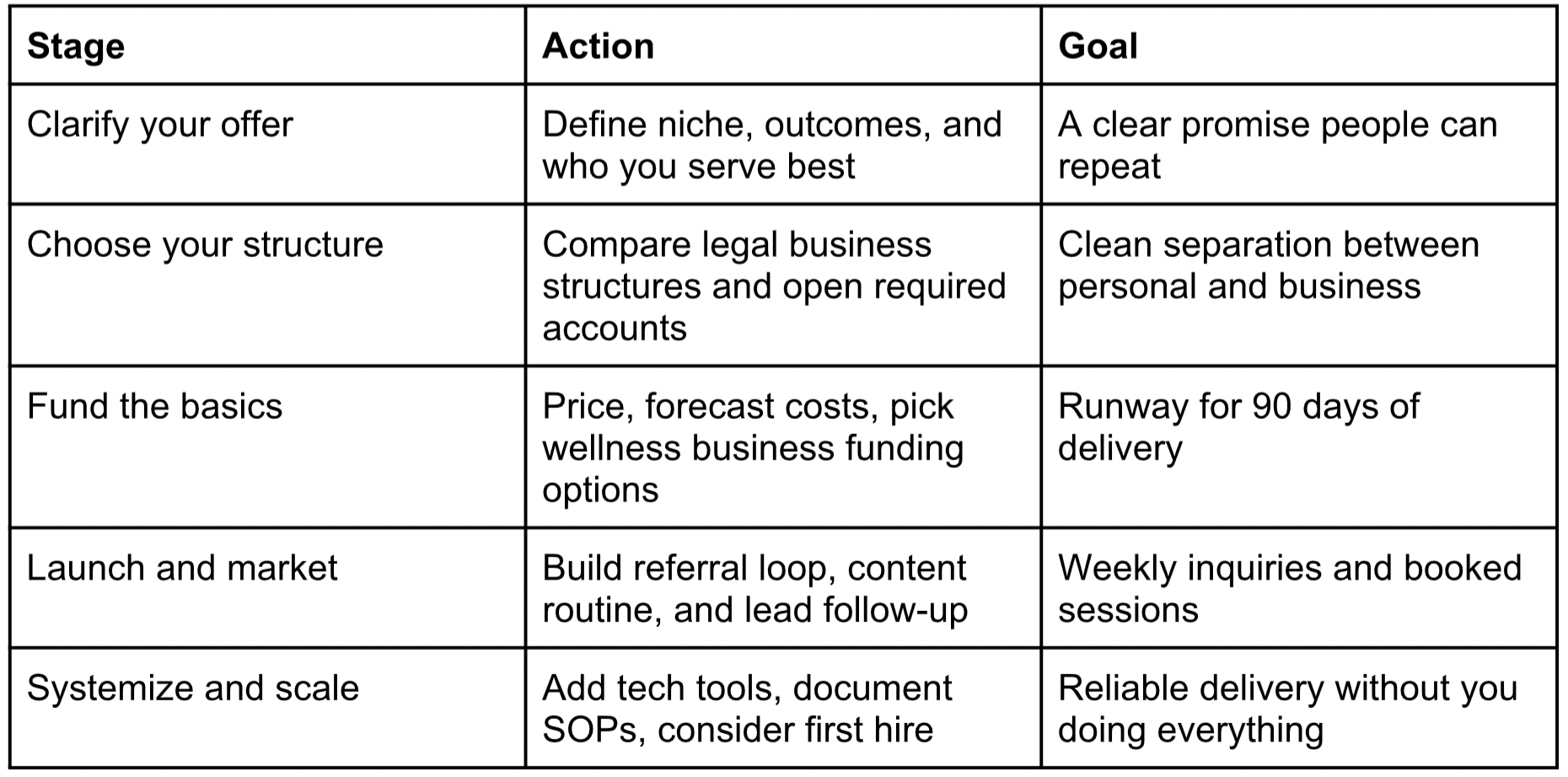
Each stage feeds the next: clarity makes setup simpler, setup makes marketing credible, and marketing data tells you what to systemize. Revisit the table monthly, adjust one lever, then return to serving clients with confidence.
Wellness Career FAQs: Licenses, Marketing, Funding
Q: What licenses or certifications do I need to get started?
A: It depends on what you do and where you operate, so verify local rules before selling sessions. If you’re offering coaching, you may not need a clinical license, but you still need clear scope, client agreements, and privacy practices. When in doubt, ask your licensing board or a small-business attorney for a quick consult.
Q: How do I stay compliant if I’m not a doctor or therapist?
A: Use education and coaching language, avoid diagnosing, and don’t promise to “treat” conditions. Build a referral list for medical and mental health professionals so clients get the right support. Simple disclaimers and solid intake forms go a long way.
Q: How can I market a fitness or wellness business without feeling salesy?
A: Lead with outcomes and proof, like client wins, testimonials, and a clear “who this is for.” Pick one channel you can sustain weekly and offer a low-pressure entry point like a workshop or trial session. Consistency beats constant reinvention.
Q: What if I don’t have money to fund my health startup?
A: Start lean with pre-sold packages, small group programs, or partnerships that share space and audiences. Track only the essentials: insurance, tools, and one marketing method. Even modest, predictable cash flow can finance your next step.
Q: What should I do when I’m unsure about a business decision?
A: Pause and get specific: what decision, what risk, and what would make it safer? Run a small test for two weeks, measure results, and then decide with real data. A mentor, accountant, or peer group can help you see blind spots.
Take One Small Step Toward a Profitable Wellness Career
Turning a wellness passion into income can feel messy when licensing, marketing, and money questions collide with self-doubt. The steadier path is a business success mindset rooted in clarity, consistency, and values-led entrepreneurial motivation, then learning as progress proves the model. With that approach, building a wellness career becomes less about guessing and more about making simple decisions that compound into trust, clients, and sustainable revenue. Start small, stay consistent, and let your work earn its next step.
Cheryl Conklin Is an aspiring writer. From being a dedicated blogger, traveler, and adventurer, she created Wellness Central so she could share her thoughts and resources gathered from her endless aspiration to achieve wellness for both herself and everyone.