
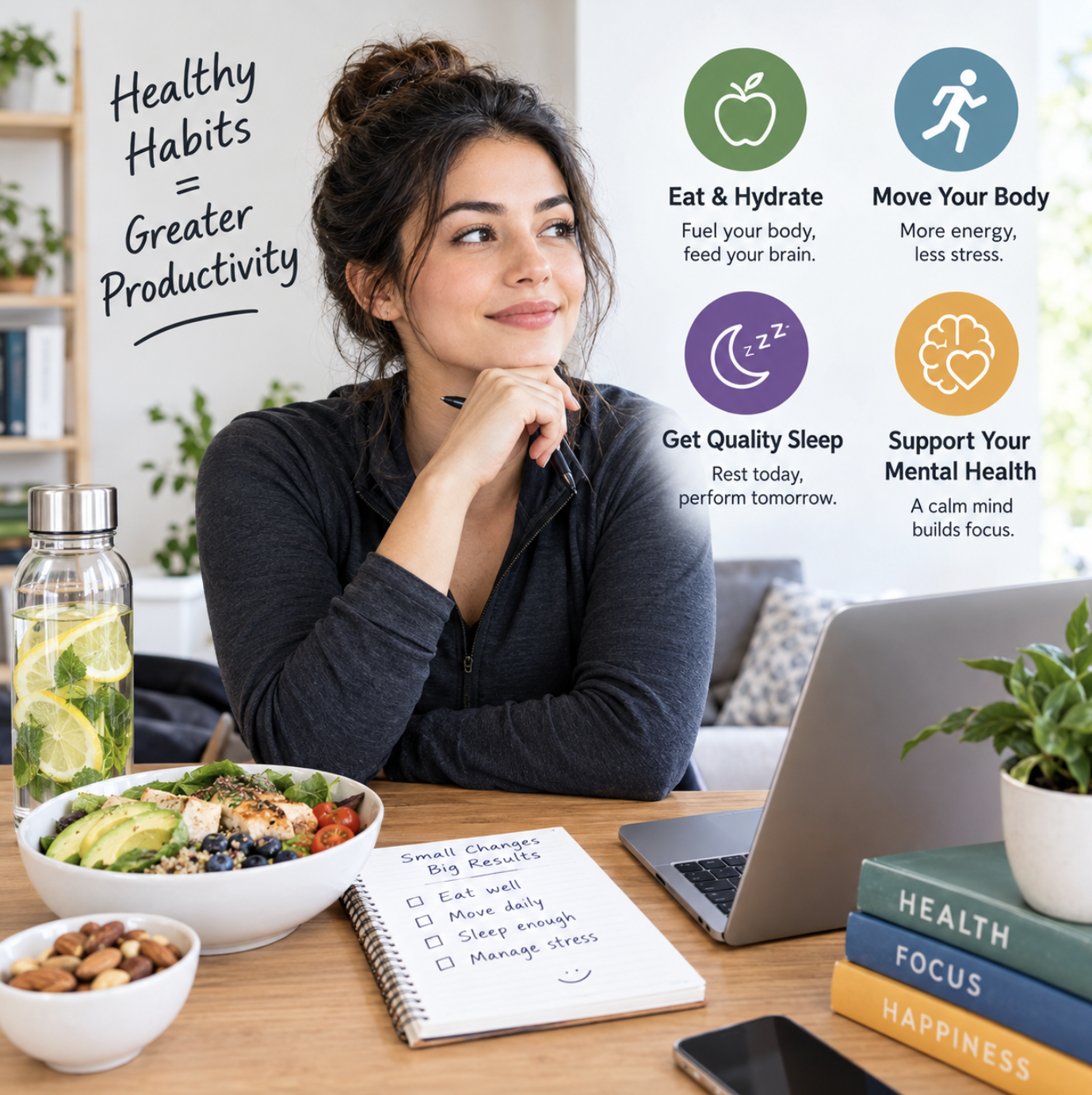
You want to be as productive as possible. You have tried everything from color coded planners to blocking your social media. Some of these produced brief increases in productivity, but your habits eventually reverted to their old ways. Productivity tricks don't work because you can only be as productive as your body and mind allow.
Many productivity tricks forget the most important aspect: your body and mind produce your output. A stressed, hungry, and tired mind will not be productive no matter how organized your planner is. That is why a holistic approach to healthy living is important. Tick all of your nutritional, physical, and mental health boxes at once.
This article will help you get more done, increase your productivity and focus without burning out.
What "Holistic" Means For Your Work Day
The word "holistic" has various meanings. To keep this simple, a holistic lifestyle consists of ways to improve your physical, mental, emotional and spiritual health. The World Health Organization has described health as a state of complete physical, mental and social wellbeing, and not merely the absence of disease.
It is important to consider your brain as a physical organ. Just like any other organ, it requires fuel and oxygen, as well as time to rest, in order to operate at its best. If you do not provide your brain with the things it needs, it will not be as effective at processing the things you want it to. For many, a lack of focus, a poor memory, and constant fatigue lead to the belief that they are lazy. In reality, your body could just be asking for what it is not getting.
Instead of completely restructuring your life, there are a few small changes you can make to drastically improve your everyday life. These changes can be made in the areas of what you eat, the activities you do, the things you touch, and how you think.
Pillar One: Eat and Drink for Steady Energy
Your brain requires a steady supply of energy to function at its best. An unbalanced or unsteady supply of energy ultimately results in a crash.
To give yourself a steadier supply of brain energy, try some of these simple habits.
● Start the day with protein. Eggs, yogurt, or nuts help give you a steady supply of energy to start your day.
● Use complex carbs. Oats or brown rice give you a steadier supply of energy, compared to white bread or pastries.
● Use good fats. Fish, olive oil, or avocados help fuel your brain.
● Eat lots of vegetables and fruit. For brain and digestive health.
● Fuel your body with good stuff. Give your brain what it needs to operate at peak performance.
● This plan focuses on two major areas: what you put in your body (hydration and nutrition), and what you do with your body (exercise and movement).
Hydration deserves its own mention. Even a slight case of dehydration can make you feel irritable and foggy. To avoid this, keep a water bottle on your desk and sip throughout the day. If you find plain water boring, add a slice of lemon or some mint leaves.
You don’t have to have a perfect diet to benefit from this plan. Aim to eat meals that help you feel alert and aware instead of sleepy and groggy. Pay attention to how different foods affect your afternoons. This awareness will help you a lot.
Pillar Two: Move Your Body, Wake Up Your Mind
Many people think they don’t have time to exercise. In reality, fitting in exercise throughout the day will increase your productivity. Also, it will help you better handle stress and improve your mood.
Health agencies recommend that adults get at least 150 minutes of moderate activity every week, and incorporate muscle strengthening exercises on two or more days. While this sounds like a lot, you can break it up. This comes to 30 minutes a day, 5 days a week, and you can fit it in however you like.
Here are some ways to add movement to a busy day:
● Take a 10 minute walk after lunch to avoid the after-lunch slump.
● Stand and stretch every 45-60 minutes if you have a desk job.
● Take phone calls while moving around.
● Take the stairs instead of the elevator.
● Bodyweight exercises are something you can easily do at home. Some good examples are bodyweight squats, push-ups, and planks.
The most important thing for seeing results is consistency. You need to find a physical activity that you actually enjoy doing. This will make you more likely to stick to it and become consistent. Consistency really pays off in the long run, productivity-wise.
Pillar Three: Protect Your Sleep Like It Is Your Job
Sleep really is the most important habit. It can turn seemingly difficult tasks and activities into easier ones. On the other hand, not getting enough sleep makes everything more difficult. This is true for even mundane and simple activities.
Adults need seven to nine hours of sleep a night, on average. A good, restful sleep really is a product of strong willpower, so making changes to your lifestyle to make sleep easier is a better strategy. The science of good sleep hygiene is a good place to start. Here are some examples:
Be consistent. Going to bed and waking up at the same time, even on weekends, is a good practice.
● Have a bedtime ritual. Take a warm shower or read a book to help relax your mind and body.
● Avoid electronic screens an hour before bed. The light from the screens and the content stimulate your mind and keep it active.
● Think about your caffeine intake. Cut off stimulants in the afternoons and evenings to help you wind down for the day.
● Make your bedroom a relaxing and comfortable place. Dark, quiet, and cool really help you rest.
View sleep as part of your work, not a reward for completing your work. You will likely get better output from an extra hour of sleep, compared to an extra hour of work.
Pillar Four: Look After Your Mental and Emotional Health
Eating well, exercising and getting adequate sleep can all help you accomplish more. But if you are constantly feeling stressed, anxious or depressed, the toll on your productivity will still be noticeable. Mental Health is not something to ignore. It affects all aspects of your life.
Take small actions to help manage your mental health. Deep breathing, meditating, journaling and taking a walk can all relieve anxiety, stress and help better manage your mood. Work can always feel demanding, but setting boundaries will help you. Once your work day is over, log off and take a break from it all. Talking to people that you trust will help you. If nothing is alleviating your anxiety, stress or depression, it is okay to reach out for professional help. It is better to get help early. Don’t feel bad for taking time from your day for an online virtual psychiatrist. The sooner you deal with your stress, the less likely it will build up to be a bigger problem.
How To Start Without Feeling Overwhelmed
We know the four pillars can feel like a lot, so here's a less daunting way to begin. First, pick one small habit from each pillar, and practice them for two weeks. They say the habits stick for good if practiced consistently for two weeks. So, once you have practiced for two weeks, pick up another habit. You could try any of the following habits to begin:
● Drink a glass of water first thing in the morning.
● Go on a 10 minute walk after lunch.
● Set a phone alarm to start winding down at 10 pm.
● Take 5 quiet minutes of breath before starting your workday.
At the end of each week, take a moment to journal how you feel. Are you less tired in the afternoons? Can you focus more? Are you feeling less anxious throughout your day? Once these habits feel natural, try adding another. The progress feels less overwhelming this way.
Conclusion: Your Best Work Starts with your Best Health
Productivity is less about doing more in a day, and more about showing up to do the work, while feeling energized, calm and clear. Nourishing your body with healthy food, moving it, protecting your rest and recharge time, builds a foundation for your best work, and it all feels less overwhelming this way. Small changes add up. Practice one little change towards your health today, and build on it tomorrow. You don't have to get it all right now. You don't even have to practice all of this perfectly starting tomorrow. Just begin with one little change. You got this!
Sara William is a digital marketing consultant, writer, freelancer, WordPress enthusiast, and coffee lover.